

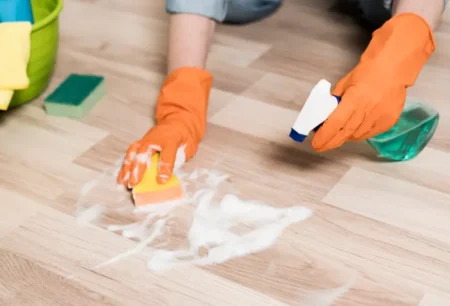
Hardwood floors look durable, but they don’t forgive mistakes. Water, harsh chemicals, and wrong tools slowly damage the finish. The goal isn’t aggressive cleaning. It’s protection.
Parquet and hardwood floors last decades when treated gently and consistently.
Start With Dry Cleaning
Dust and grit are the real enemies. Small particles act like sandpaper under shoes. Over time, they scratch the finish and dull the surface.
Use a soft broom, microfiber mop, or vacuum with a hardwood setting. No rotating brush rollers that can leave marks. Regular dry cleaning prevents deeper damage later.
Use Minimal Water
Water is not hardwood’s friend. Excess moisture seeps into seams and causes swelling, warping, or staining.
When mopping, the cloth should be slightly damp, not wet. If you see standing water, it’s too much. The floor should dry quickly after cleaning.
Less moisture means longer lifespan.
Choose The Right Cleaner
Harsh cleaners, vinegar, and ammonia break down protective finishes. Many people use homemade solutions without realizing the damage builds gradually.
Use a cleaner specifically designed for hardwood floors. These are formulated to clean without stripping the finish. Gentle products protect the surface layer that keeps wood safe.
Wipe Spills Immediately
Spills shouldn’t sit. Even small amounts of liquid can leave marks if ignored. Blot, don’t scrub. Scrubbing grinds liquid deeper into seams.
Quick response prevents stains and swelling.
Protect High-Traffic Areas
Entryways and hallways take the most impact. Using rugs in these areas reduces scratches and wear. Make sure rugs have breathable, non-rubber backing so moisture doesn’t get trapped underneath.
Prevention is easier than refinishing.
Avoid Steam Mops
Steam may seem efficient, but heat and moisture combined can weaken finish and force moisture into wood fibers. Over time, this causes separation and dull patches.
Hardwood prefers gentle care over high-temperature solutions.
Maintain Indoor Humidity
Wood reacts to air conditions. Too much humidity causes expansion. Too little causes shrinking and gaps. Maintaining balanced indoor humidity helps preserve stability.
This isn’t cleaning, but it protects the floor long term.
Polish Only When Necessary
Over-polishing creates buildup. Use polish sparingly and only when recommended for your finish type. Not all hardwood floors are meant to be polished regularly.
Knowing your floor’s finish — oil-based, polyurethane, or waxed — matters.
Deep Cleaning Isn’t Frequent
Hardwood doesn’t need deep cleaning weekly. Regular light maintenance works better. Over-cleaning with strong products shortens lifespan.
Consistency beats intensity.
A Clean Hardwood Floor Should Feel Natural
When cleaned properly, hardwood keeps its warmth and texture. It shouldn’t feel sticky, overly shiny, or slippery.
The goal is preservation, not transformation. Gentle routine care keeps parquet floors beautiful for years without unnecessary damage.
Picture Credit: Freepik