

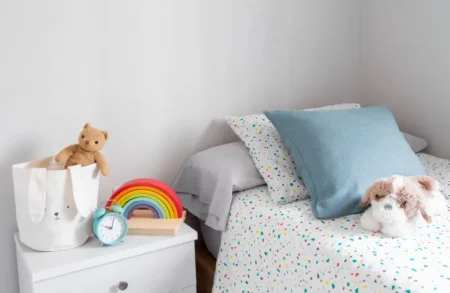
A child’s bedroom isn’t just where they sleep. It’s where they calm down, get overwhelmed, play, hide, think, and slowly learn how to be alone with themselves. That’s a lot to ask from one room.
Adults often design kids’ bedrooms around looks or age. Cute themes, trendy colors, furniture they’ll “grow into.” What actually matters more is how the space makes a child feel day after day. Safe, calm, flexible. Not perfect. Supportive.
The best kids’ bedrooms don’t impress guests. They work for the child living in them.
Comfort Comes Before Style Every Time
Kids notice comfort faster than design.
If the bed is uncomfortable, the room fails. If the lighting is too harsh, the room feels stressful. If the temperature is off, nothing else matters. These basics sound obvious, but they’re often overlooked in favor of decoration.
A good mattress, breathable bedding, soft lighting, and consistent temperature do more for a child’s well-being than any themed wallpaper. When a room feels physically comfortable, emotional regulation becomes easier too. Kids settle faster when their bodies aren’t fighting the space.
The Room Should Grow Without Being Rebuilt
Children change fast. Their rooms shouldn’t need a full makeover every two years.
Instead of designing for a specific age, it helps to design for flexibility. Neutral walls, adjustable lighting, furniture that can shift purpose. A play corner becomes a reading spot. A toddler bed becomes a regular one without rearranging the whole room.
When the room can evolve quietly, the child feels continuity instead of disruption. That stability matters more than matching their current obsession.
Storage Is Emotional, Not Just Practical
Clutter overwhelms kids faster than adults, even if they can’t explain why.
When toys, books, and clothes don’t have clear places, the room feels chaotic. That chaos shows up as irritability, resistance at bedtime, or trouble focusing. Good storage reduces friction in everyday moments.
The key is accessibility. Storage should match the child’s ability level. If they can reach it and understand it, they’re more likely to use it. That creates a sense of control, which kids crave more than adults realize.
Lighting Sets The Emotional Tone Of The Room
Lighting does a lot of invisible work.
Bright overhead lights are fine for play and cleaning. They’re terrible for winding down. A good child’s bedroom has layers of light. Something soft for evenings, something brighter for daytime, and something gentle for nighttime reassurance.
Night lights shouldn’t turn the room into daylight. Just enough glow to feel oriented and safe. Darkness isn’t the enemy. Sudden brightness is.
When lighting supports transitions, bedtime stops feeling like a battle.
Quiet Matters More Than Silence
You can’t make a house silent. You can make a bedroom feel protected from noise.
Soft materials help. Rugs, curtains, fabric wall elements, even upholstered furniture absorb sound and reduce echo. That makes the room feel calmer, especially for sensitive kids.
Noise from outside the room matters too. White noise or consistent background sound often helps more than trying to eliminate every noise. Predictability is what relaxes the nervous system, not total silence.
A Bedroom Should Allow Both Play And Rest
Some parents try to separate play and sleep completely. Others let everything mix. The healthiest approach is balance.
The room should allow play, but not demand it at bedtime. Clear zones help, even subtle ones. A corner for toys, a bed area that stays calmer. Not rigid rules, just visual cues.
This helps the brain understand what’s expected in each part of the space. Over time, that makes transitions smoother without constant reminders.
Personal Doesn’t Mean Overstimulating
Personal touches matter. Too many of them don’t.
A few favorite items, drawings, photos, or objects with meaning help a child feel ownership. Covering every wall and surface usually creates visual noise. Kids often sleep better in rooms that feel simple, even if they’re colorful.
The goal isn’t minimalism. It’s clarity. When the room reflects the child without overwhelming them, it becomes a place they want to return to.
The Best Bedroom Feels Safe When No One Is There
The true test of a child’s bedroom is how it feels at night, alone.
Can the child relax there without distraction. Does the room feel predictable. Does it support calm instead of pushing stimulation. These things aren’t obvious during the day, but they show up at bedtime.
The best bedroom for a child isn’t the most stylish or expensive. It’s the one that quietly supports rest, play, growth, and comfort without demanding attention. When a room does that, the child doesn’t think about it. They just feel okay being there.
Picture Credit: Freepik