

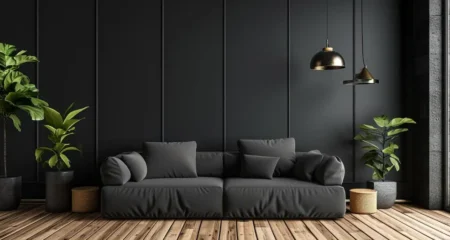
Dark colors scare a lot of people. They imagine small rooms, heavy air, and a space that feels closed in. But in reality, dark interiors often do the opposite. They create depth. When used right, dark tones don’t shrink a home. They give it character.
A dark interior doesn’t try to impress. It holds you.
Dark Colors Create a Sense of Safety
There’s a psychological reason dark spaces feel comforting. Lighter rooms reflect everything. Dark rooms absorb. That absorption reduces visual noise. Your eyes relax. Your mind slows down.
This is why people often feel calmer in dimly lit cafes, libraries, or bedrooms with deep colors. Dark walls act like a soft boundary. They tell your nervous system it’s okay to rest. Especially in a world full of screens and brightness, that sense of enclosure feels surprisingly good.
Why Dark Doesn’t Mean Small
The biggest myth about dark interiors is that they make rooms smaller. Size isn’t defined by color alone. It’s defined by contrast, lighting, and balance.
A dark wall paired with the right lighting creates depth instead of flatness. Shadows add layers. Corners feel intentional instead of forgotten. When everything is light, nothing stands out. When you introduce dark tones, the space gains structure.
Dark rooms don’t feel small. They feel finished.
How Light Changes Everything
Lighting decides whether dark interiors feel elegant or heavy. Soft, warm light works best. Floor lamps, wall sconces, indirect lighting, and dimmers make dark tones glow instead of swallow the room.
Harsh overhead lighting ruins the effect. It flattens the color and kills the mood. Dark interiors need light that moves gently across surfaces. When light is layered and warm, dark walls feel rich and calm, not oppressive.
Dark Colors Highlight Texture
Dark tones make textures visible. Wood grain stands out more. Stone feels deeper. Fabric looks softer. Matte finishes become luxurious.
In light rooms, texture often disappears. In dark spaces, it becomes the star. That’s why dark interiors feel tactile. You don’t just see the room. You feel it.
This is especially powerful in bedrooms, living rooms, and reading spaces where comfort matters more than brightness.
Where Dark Tones Work Best
Dark interiors shine in spaces meant for rest or focus. Bedrooms feel more cocooned. Living rooms feel warmer and more intimate. Home offices feel grounded and serious.
Kitchens and bathrooms can handle dark tones too, especially when balanced with light counters or reflective surfaces. The key is intention. A dark room needs a purpose. When the purpose is clear, the design works.
Balance Keeps Dark From Feeling Heavy
Dark doesn’t mean everything must be dark. Balance is what keeps the space breathable. Lighter ceilings, warm wood, metal accents, natural fabrics, and open space prevent the room from feeling closed.
You don’t fight dark tones with white. You support them with contrast. A dark wall next to a light curtain. A deep sofa against a textured rug. A shadowy corner balanced by a soft lamp. This interplay keeps the room alive.
Dark Interiors Feel Timeless
Trends change fast, but dark interiors age well. They don’t scream a specific year.
People often get tired of overly bright spaces because they demand attention. Dark spaces don’t demand. They invite. And that invitation doesn’t expire.
Why Dark Design Feels Like Confidence
Choosing dark tones is a confident move. It says you know how you want to feel in your space. It says you’re designing for experience, not approval.
A dark interior isn’t about drama. It’s about presence. It creates a home that supports you emotionally, not just visually. A place that feels calm, protective, and intentional.
When done with care, dark interiors don’t weigh you down. They hold you steady.
Picture Credit: Freepik